

If you play FPS games with low sensitivity, you probably move your mouse more than you realize. A quick turn can take half the mousepad. Tracking a moving target may require a long, controlled swipe. After that, you still need to bring the mouse back into position without losing your rhythm.
This is where mouse weight starts to matter.
A lightweight gaming mouse will not suddenly improve your aim, and there is no single mouse weight that works for everyone. But when your playstyle depends on large and frequent movements, a lighter mouse can feel noticeably easier to control.
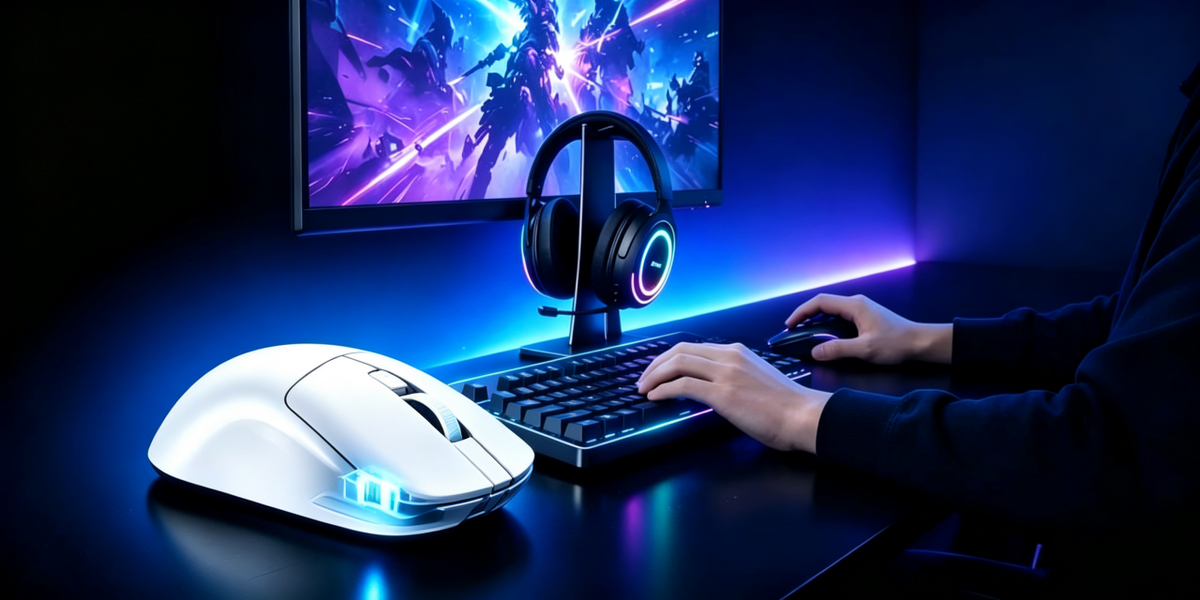
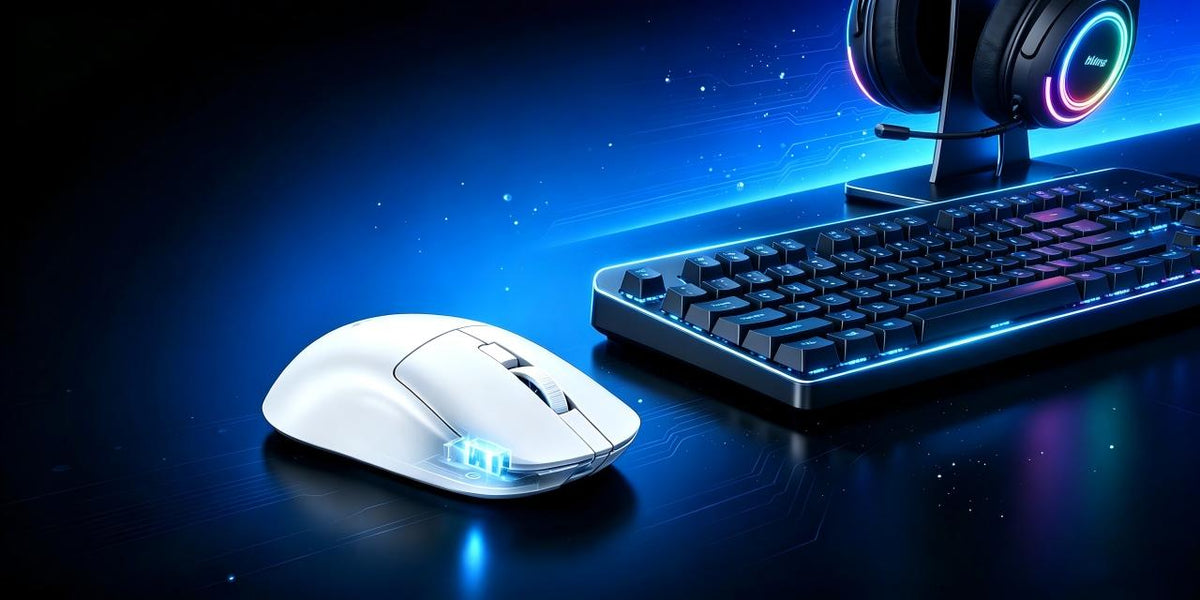
For players considering the DRUNKDEER Glacier X Mouse, its 62g weight is particularly relevant to this type of gameplay.
Low Sensitivity Changes How You Use a Mouse
Low sensitivity is often chosen by FPS players who want more control over precise aiming. Instead of relying mainly on small wrist movements, they can use a combination of wrist and arm movement to turn, track targets, and make fine adjustments.
The downside is simple: the mouse has to travel farther.
Imagine tracking an opponent who is moving across your screen. With low sensitivity, you may need to move your mouse several inches to stay on target. If the opponent suddenly changes direction, you have to react just as quickly in the opposite direction.
These movements are easy to overlook when comparing specifications on a product page. In an actual match, though, they happen constantly.
That is why the weight of an FPS gaming mouse can become more noticeable for low-sensitivity players than it might be for someone who barely moves the mouse.

What Does a Lighter Mouse Feel Like in Real Gameplay?
The biggest difference is usually not one dramatic moment. It is the way the mouse behaves across repeated movements.
With a lighter mouse, starting a swipe generally feels easier. Changing direction can also feel more natural because there is less mass to move. When you need to lift the mouse and reposition it, there is less weight in your hand.
For a player using low sensitivity, that can be useful during situations such as:
- making a fast 180-degree turn
- following a target across a wide area of the screen
- moving from one target to another
- repeatedly lifting and repositioning the mouse
- making large arm movements during an extended match
None of these automatically makes you more accurate. The benefit is mainly in how easily you can perform the movement you already know how to make.

Is Lighter Always Better?
No.
This is probably the most important point when choosing a lightweight gaming mouse.
Some players immediately prefer a very light mouse. Others find that an ultra-light design feels too easy to move and prefer something with more weight underneath their hand. A heavier mouse can provide a more grounded feeling, especially for players who like to make deliberate, controlled movements.
Sensitivity also changes the equation.
A high-sensitivity player may use relatively small mouse movements most of the time. For that player, reducing the mouse weight may not make a major difference.
Low-sensitivity players tend to have a different experience because their mouse travels farther and more often. If you regularly use a large mousepad and aim primarily with your arm, the difference in weight can be easier to notice.
So the better question is not “Is a lighter mouse better?”
It is “Does a lighter mouse suit the way I actually play?”
Why 62g Can Make Sense for Low-Sensitivity Players
The DRUNKDEER Glacier X weighs 62g, which puts it in the lightweight gaming mouse category.
For low-sensitivity FPS players, that number matters because of the amount of movement involved. When a mouse has to travel across a large mousepad repeatedly, reducing its weight can make those movements feel less demanding.
There is also a practical benefit when repositioning.
In a competitive match, you may swipe quickly, reach the edge of your usable mouse area, lift the mouse, move it back, and continue aiming. A lighter design can make this sequence feel less interrupted.
That does not mean 62g is the ideal weight for every player. It simply makes sense for a particular style of play—especially for people who prefer an agile mouse that does not feel heavy during large movements.

Weight Is Only Useful If the Sensor Keeps Up
A lightweight shell is not enough to make a good competitive gaming mouse.
Your hand can move quickly, but the sensor still needs to translate that movement consistently. If tracking feels unpredictable, the advantage of a lighter design quickly becomes irrelevant.
The DRUNKDEER Glacier X uses the PAW3955 sensor and supports up to 50,000 DPI. In reality, most FPS players are unlikely to use anything close to 50,000 DPI. What matters more is how consistently the sensor tracks at the DPI and sensitivity you actually use.
This is an important distinction when comparing gaming mice.
A high maximum DPI number may look impressive on a specification sheet, but FPS players usually care more about predictable tracking, controlled movement, and a consistent feel from one match to the next.
What About 8000Hz Polling?
The Glacier X also supports an 8000Hz polling rate.
Polling rate determines how frequently the mouse reports its position to the computer. A higher rate can provide more frequent input updates and contribute to smoother cursor movement, particularly on systems and displays that can take advantage of it.
But 8000Hz should not be treated as a shortcut to better aim.
If your sensitivity, grip, or movement technique does not suit you, a higher polling rate will not solve those problems. It is simply another part of the mouse's overall input performance.
For someone comparing a high-performance gaming mouse, it makes more sense to look at polling rate together with the sensor, weight, shape, and connection rather than treating any one specification as the deciding factor.

Why Wireless Can Be Useful for Low-Sensitivity Players
Low sensitivity often means bigger swipes. Bigger swipes also mean the mouse cable has more opportunities to become noticeable.
A wireless gaming mouse removes that physical connection between the mouse and computer. There is no cable dragging across the desk or catching against the edge of a mousepad.
For small movements, the difference may not be particularly important. During a long arm swipe, however, cable resistance can be much easier to notice.
This is one reason a wireless gaming mouse can work well with a low-sensitivity FPS setup. The point is not that wireless is automatically faster. It is that removing the cable can make large movements feel less restricted.
Think About Your Mousepad Too
A lightweight mouse does not exist in isolation.
The surface underneath it can change how the mouse feels just as much as the mouse itself. A fast mousepad paired with a lightweight mouse can feel very different from the same mouse on a control-oriented surface.
For low-sensitivity players, mousepad size is also important. If your sensitivity requires large arm movements, a larger surface gives you more room to work with and reduces the need to constantly reposition the mouse.
This is why choosing a lightweight gaming mouse for FPS should really be part of a larger setup decision.
Mouse weight, shape, feet, surface, grip, and sensitivity all affect one another.
Which Players Are Most Likely to Notice the Difference?
A lightweight design is particularly worth considering if your setup looks something like this:
Low sensitivity + large mousepad + arm aiming + frequent large swipes
In that situation, the mouse is moving a lot throughout a match. Weight becomes something you interact with constantly rather than something you notice only when picking the mouse up.
Players using higher sensitivity or mostly wrist-based movements may have a different experience. They may care more about shape, grip comfort, click feel, or overall stability.
There is no need to follow a particular mouse trend simply because lightweight designs are popular in competitive gaming. Your own movement pattern is a much more useful reference point.
Don't Choose a Gaming Mouse by Weight Alone
When comparing a lightweight gaming mouse, it is tempting to start with the weight and stop there.
That can be misleading.
A 60g mouse with an uncomfortable shape may be a worse fit for you than a slightly heavier mouse that naturally fits your hand. Likewise, an excellent sensor does not help much if the mouse is difficult to control.
Before choosing a mouse, it is worth considering:
- How low is your in-game sensitivity?
- Do you aim mainly with your wrist, arm, or both?
- How large is your mousepad?
- Do you frequently lift and reposition the mouse?
- Do you prefer a fast or controlled surface?
- Does the shape fit your grip?
- Do you prefer the unrestricted movement of wireless?
- Can your PC and display take advantage of a high polling rate?
These questions tell you much more about whether a mouse will suit you than the weight printed on the box.
So, Is a Lightweight Gaming Mouse Better for Low-Sensitivity FPS?
For some players, it can be.
Low-sensitivity FPS gameplay naturally involves more physical mouse movement. A lighter mouse can make those repeated swipes, direction changes, and repositioning movements feel easier, particularly when playing with a large mousepad and arm aiming.
The DRUNKDEER Glacier X takes this approach with a 62g body, PAW3955 sensor, up to 8000Hz polling, and wireless connectivity. Together, these specifications are aimed at players who want a responsive and relatively unrestricted mouse for fast-paced gameplay.
But the real test is always how the mouse fits your own setup.
If you already use low sensitivity and find yourself constantly moving across the mousepad, weight is worth paying attention to. If you prefer a more planted feeling, a heavier gaming mouse may feel more natural.
In the end, a lightweight gaming mouse is not about chasing the lowest number on a specification sheet. It is about making the physical side of aiming work with your sensitivity, your grip, and the way you actually play.