
 competitive FPS mouse

카트
장바구니가 비어있습니다
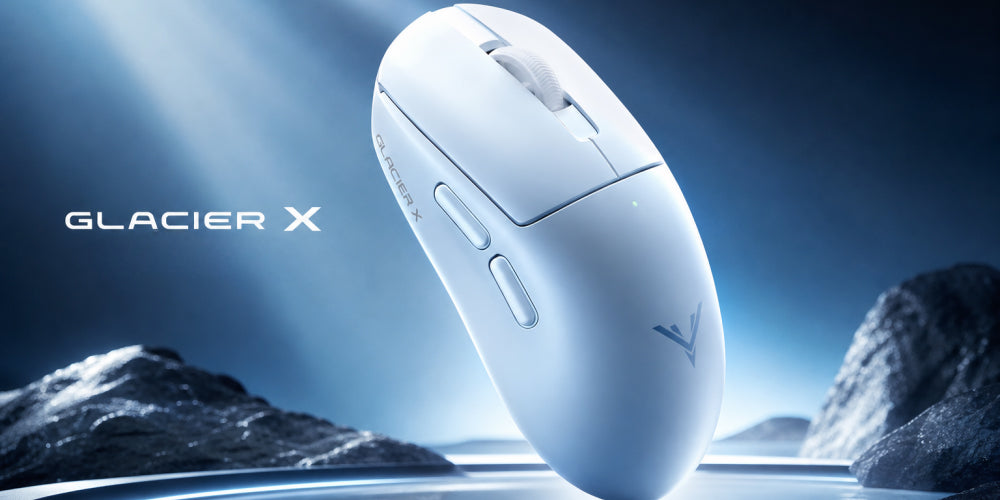
A competitive gaming mouse is easy to describe on a product page. Low weight, high DPI, fast polling rate, precise sensor — the usual list is not difficult to put together.
The harder part is making those specifications work together when the game gets fast.
In an FPS match, players rarely make one type of movement. A long swipe can be followed by a small correction. A quick flick may need to stop exactly where the target appears. Repeated clicks have to feel consistent, and the mouse needs to keep up without getting in the way.
That is what makes control so important. For DrunkDeer, the GLACIER X is built around this idea. Its MIMS switch technology, PAW3955 sensor, 8000Hz polling, haptic feedback, and multi-grip design each address a different part of the same problem: giving the player a more direct and predictable connection with the game.
A gaming mouse can track movement perfectly, but that is only half of the input. The click itself also needs to feel consistent. Traditional mechanical switches use physical contacts, which means the signal can require debounce handling. Over time, mechanical switches can also develop double-clicking problems.
DrunkDeer takes a different route with MIMS (Magnetic Induction Micro Switch) Tech. Instead of relying on traditional mechanical contacts, MIMS uses magnetic induction to detect the input.
The purpose is straightforward. It removes the need for conventional debounce behavior and is designed to avoid double-clicking caused by mechanical switch wear. More importantly for competitive players, MIMS also gives DrunkDeer a platform for adjustable actuation, Rapid Trigger, and haptic feedback.
So the switch is not treated as a basic on/off component. It becomes part of the way the player controls the mouse.

Different players have different preferences when it comes to input. Some like an immediate response. Others prefer a little more travel before an action registers. That difference can be small, but it becomes noticeable after hours of playing.
With adjustable actuation, MIMS allows users to configure the point at which an input is registered. Rapid Trigger adds another level of control by responding to changes in the input without relying on a conventional fixed release point.
This matters most in games where actions happen in quick succession. The mouse does not need to make the player think about the switch. Ideally, the input should feel predictable enough that the player's attention stays on the game.
There is another interesting part of the MIMS system: feedback. The GLACIER X uses a built-in linear motor with five haptic feedback intensity presets. Players can adjust the strength of the tactile response instead of having one fixed setting.
This is useful for a simple reason. Visual feedback is not the only way to know that an input has been registered. A physical response from the mouse can give the hand another reference point.
The key is balance. Haptic feedback should add information without getting in the way of the input itself. By allowing the intensity to be adjusted, DrunkDeer gives users some control over how much feedback they want from the mouse.

DPI is probably the most familiar number on a gaming mouse specification sheet. It is also one of the easiest to misunderstand.
A higher maximum DPI does not automatically make a mouse more accurate. What matters in actual gameplay is how consistently the sensor tracks movement at the sensitivity the player uses.
The PAW3955 flagship sensor in GLACIER X supports 100–50,000 DPI, with up to 60G acceleration and 750 IPS tracking speed.
Those numbers provide plenty of room for different sensitivity preferences. More importantly, the sensor is designed to keep up with fast physical movement.
Think about a typical FPS situation. A player may move the mouse several inches for a turn, then immediately make a much smaller movement to adjust the crosshair. Those two actions require very different amounts of movement, but the relationship between the hand and the cursor still needs to feel consistent.
That is where sensor performance becomes more relevant than simply chasing the highest DPI number.
Polling rate describes how frequently a mouse reports its state to the computer. A higher rate can make input reporting more frequent, which becomes particularly relevant during fast mouse movement.
GLACIER X uses the Nordic nRF54LM20A MCU and supports an 8000Hz polling rate in both 2.4G wireless and USB-C wired modes.
For a competitive player, the important point is consistency. A mouse that moves quickly across the pad should continue sending frequent updates while the movement is happening. The same applies when the player makes small corrections after a fast swipe.
Polling rate does not work alone, of course. Sensor capability, firmware, connection quality, and the rest of the system all contribute to the final result. That is why an 8000Hz mouse makes more sense when the underlying hardware is designed to support high-frequency input as well.

It is easy to get caught up in sensors and switches and forget about the part the player actually holds. Hand position changes the way a mouse moves. A player using a palm grip generally moves the mouse differently from someone using a claw or fingertip grip. The contact points, wrist position, and amount of finger movement all change.
GLACIER X uses an ergonomic multi-grip design that supports Palm, Claw, and Fingertip grip styles. That does not mean one shape will feel identical for every player. It means the design takes different grip habits into account rather than assuming every competitive player holds a mouse in the same way. For long sessions, that flexibility matters. A mouse can have excellent internal hardware, but if the shape constantly forces the hand into an uncomfortable position, the specifications become much less meaningful.
This is where gaming mouse design gets interesting.
A sensor can be fast, but tracking alone does not determine the quality of the input. A high polling rate can increase reporting frequency, but it does not replace sensor performance. A responsive switch can register clicks quickly, but the player still needs a shape that allows precise physical control.
GLACIER X approaches these areas as parts of one system.
MIMS (Magnetic Induction Micro Switch) Tech handles the click and provides adjustable actuation, Rapid Trigger, and customizable haptic feedback. The PAW3955 handles movement tracking, with up to 50,000 DPI, 60G acceleration, and 750 IPS tracking speed. The Nordic nRF54LM20A MCU supports 8000Hz polling in both 2.4G wireless and USB-C wired modes.
Then there is the physical side: an ergonomic design built around Palm, Claw, and Fingertip grips. None of these features replaces the others. They solve different parts of the same control problem.
Players may not consciously think about sensor architecture or MCU specifications while playing. What they notice is how the mouse behaves.
Does a flick feel predictable? Does a small adjustment feel controlled? Do repeated clicks behave consistently? Does the mouse keep responding when movement becomes fast? Does the shape still feel natural after several hours?
Those experiences come from the hardware underneath.
This is also why product specifications need some context. 50,000 DPI, for example, sounds impressive, but the more useful question is how the sensor performs at the player's preferred sensitivity. The same applies to 8000Hz polling. The number matters, but so does the rest of the hardware supporting it.
A well-designed competitive gaming mouse should make those technical decisions feel almost invisible during play. The player should be thinking about the game, not about whether the mouse is keeping up.

DrunkDeer's GLACIER X takes a fairly clear approach: reduce the distance between what the player does with the hand and what happens in the game.
MIMS changes how the mouse handles input. Adjustable actuation and Rapid Trigger give players more control over response behavior, while five haptic feedback presets let them choose how strongly the mouse confirms an input.
The PAW3955 sensor provides the tracking performance needed for fast and precise movement. The Nordic nRF54LM20A MCU brings 8000Hz polling to both wireless and wired operation.
The multi-grip design then brings everything back to the physical side of gaming, supporting Palm, Claw, and Fingertip users. It is a combination that makes sense for players who care about control rather than one isolated specification.
There is no single number that can define a competitive gaming mouse.
Look at the switch first. Consider how it registers input and whether its behavior matches the way you play. Then look at the sensor and its tracking performance rather than focusing only on maximum DPI. Polling rate is another piece of the puzzle, especially for players who make fast and frequent movements.
Finally, do not ignore the shape.
A competitive mouse spends hours in your hand. The relationship between grip, movement, switch response, sensor tracking, and polling rate ultimately determines how natural the mouse feels during play.
That is the idea behind the GLACIER X. DrunkDeer is not simply adding faster components to a mouse. The design brings input technology, tracking, reporting, feedback, and ergonomics together around one basic requirement: giving players control when every movement counts.
MIMS stands for Magnetic Induction Micro Switch. DrunkDeer's technology uses magnetic induction instead of traditional mechanical switching and supports adjustable actuation, Rapid Trigger, and customizable haptic feedback.
Rapid Trigger is designed to respond quickly to changes in input. It is intended for situations where players make frequent and rapid actions.
GLACIER X uses the PAW3955 flagship sensor, with 100–50,000 DPI, up to 60G acceleration, and 750 IPS tracking speed.
Yes. The Nordic nRF54LM20A MCU supports an 8000Hz polling rate in both 2.4G wireless and USB-C wired modes.
The ergonomic design supports Palm, Claw, and Fingertip grip styles.

